

Where to Buy Authentic Americana Apparel in 2026
Table of Contents
- Finding Authentic Americana Apparel in a Sea of Knockoffs
- What Separates Americana Clothing Brands From Fast-Fashion Copies
- Vintage Americana Clothing: Why the Look Matters More Than the Label
- How to Identify Authentic Vintage Clothing Before You Buy
- Vintage Graphic Tees: What to Look For in Fabric and Print
- Where to Buy Authentic Americana Apparel: A Curated Shortlist
- Price, Shipping, and Returns: What to Expect When You Buy
- Frequently Asked Questions
Last Updated: October 6, 2026
Finding Authentic Americana Apparel in a Sea of Knockoffs
The hardest part of buying where to buy authentic americana apparel isn't finding a flag on a shirt. It's finding one worth keeping. Most search results are blank tees with a flag graphic dropped on top, printed fast and priced low.
That gap between a real piece and a knockoff comes down to three things: the fabric, the print method, and the design intent. Get those right and a tee becomes a staple you reach for every weekend.
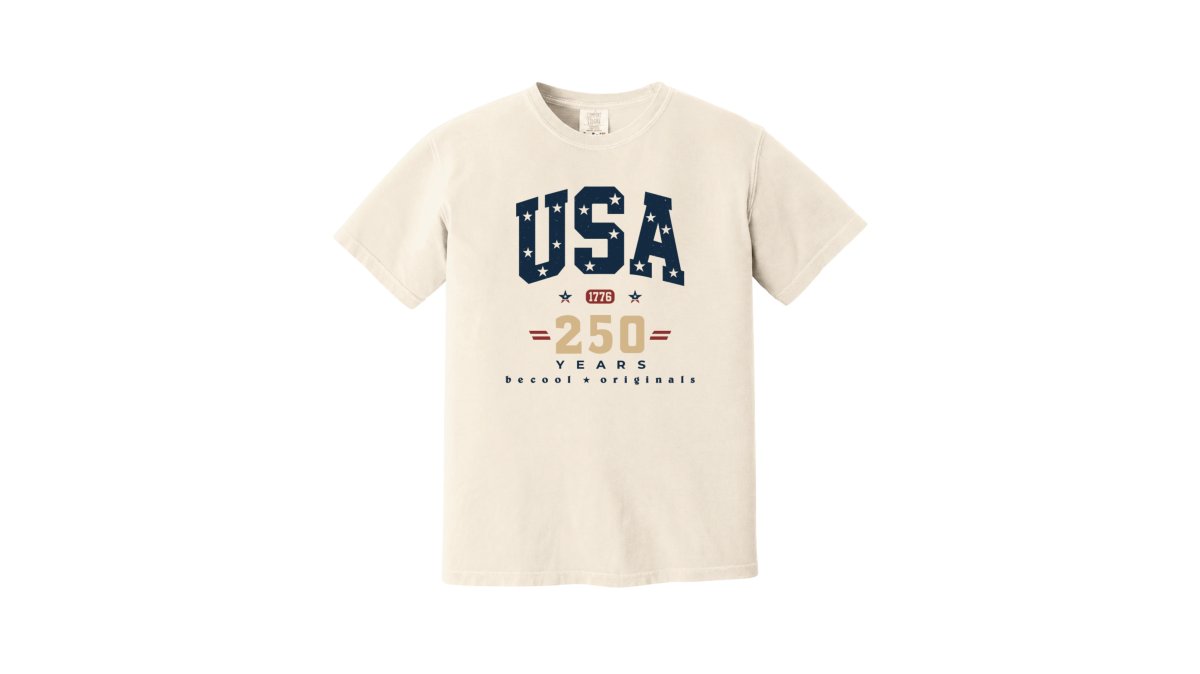
Here's what we'll cover: how to spot quality before you buy, what vintage Americana really means, and a shortlist of pieces worth your money, plus what separates a $42 tee from a $12 one.

What Separates Americana Clothing Brands From Fast-Fashion Copies
Real Americana clothing brands start with the garment, not the graphic. Fast-fashion operations work backward: pick a trending image, print it on the cheapest blank, ship it.
The tell is in the fabric weight and finish. Garment-dyed cotton is washed after construction, giving it a broken-in softness, a slightly uneven lived-in color, and less shrinkage over time. Standard blanks skip that step entirely.
Then there's the print. A screen print with proper ink coverage sits in the fabric and flexes with it. Cheap heat-transfer prints sit on the fabric and crack along every fold.
Vintage Americana Clothing: Why the Look Matters More Than the Label
Vintage Americana clothing works because it references something real. The faded navy, off-white, slightly imperfect print, and small-town imagery borrow from decades of American casual wear, heritage athletics, roadside signage, farm-country graphics. That's why it lasts in style while trend-driven graphics cycle out in a season.
Chasing an actual vintage label is a trap. Genuine 1970s tees are scarce, expensive, and often too fragile to wear. Most people want the feel of vintage with the durability of something new, a design decision, not an age requirement.
Our approach at Becool Originals leans into that. The USA Peace Tee ($42.00) pairs a signature peace sign icon with a palette pulled from long summer days, lake weekends, and open roads. The Heritage Tee ($42.00) draws on America's heritage of freedom and independence in a clean, timeless cut. Both look like they've been in your drawer for years.

How to Identify Authentic Vintage Clothing Before You Buy
Authentic vintage clothing is genuine older apparel, typically at least twenty years old, sold secondhand rather than reproduced. If you're shopping true vintage, the checklist is mechanical, not mystical.
- Check the tag first. Older tags use different fonts, materials, and country-of-origin wording than modern ones.
- Look at the stitching. Single-stitch hems generally indicate pre-1990s construction; double-stitch is later.
- Inspect the print edges. Real vintage prints fade evenly and sit flush with the fabric. Cracks and peeling suggest a cheap original or a modern fake.
- Feel the cotton. Older cotton tends to be heavier and drier. If it feels slick or stretchy, it's likely a modern blend.
- Smell it. Musty is fixable. A chemical or perfume smell often hides damage.
For reproduced Americana, the same eye applies to intent. A brand reproducing a heritage look should tell you what era inspired the design and why the colors were chosen. Vague answers usually mean the graphic came from a stock library.
According to the Federal Trade Commission's guidance on textile and country-of-origin labeling, apparel sold in the U.S. must carry accurate fiber content, country of origin, and care information. That tag is your first line of defense when a listing is vague about materials.
Vintage Graphic Tees: What to Look For in Fabric and Print
Vintage graphic tees live or die on two specs: fabric weight and print method.
On fabric, look for mid-to-heavy cotton with a garment-dyed or washed finish, substantial in hand, soft against skin. On print, screen printing remains the durability standard because the ink bonds into the cotton fibers rather than resting on the surface.
What to Check |
Quality Signal |
Warning Sign |
|---|---|---|
Fabric finish |
Garment-dyed, soft from day one |
Stiff, slick, or overly shiny |
Print method |
Screen print, ink sits in fabric |
Plastic-feeling heat transfer |
Print edges |
Sharp, even, flexible |
Cracking or peeling at folds |
Seams |
Finished and reinforced |
Rough, loose interior stitching |
Care tag |
Clear fiber and care instructions |
Missing or generic labeling |
Care matters as much as construction. Wash graphic tees inside out in cold water and skip the dryer when you can, heat kills both the print and the fit. The Classic Tee ($42.00) is built on that premise: a clean vintage aesthetic inspired by heritage athletics, printed on premium garment-dyed cotton so it holds its shape and color through repeated wear.

Where to Buy Authentic Americana Apparel: A Curated Shortlist
Direct-from-brand (our line):
**1. Inspired by open roads and lake weekends. Shop the USA Peace Tee
2. The Heritage Tee, $42.00. The most traditionally Americana of the group. Freedom and independence imagery in a timeless cut that works with denim, chinos, or shorts. Shop The Heritage Tee
**3. The one to buy if you want the Americana look without a loud graphic. Shop The Classic Tee
**4. Minimal, timeless, built for everyday wear. Shop The Peace Tee
Independent and heritage retailers worth checking:
**5.
6. Heritage outdoor and workwear brands. Established American outdoor and workwear companies have sold graphic tees and fleece for decades.
7. Regional screen-print shops. Many mid-size American cities have a screen-print shop that also runs a small house label.
8. Museum and heritage-site gift shops. Historical sites and museums often carry apparel tied to a specific place or era.
9. Vintage and resale marketplaces. For true vintage, established resale platforms and independent vintage dealers are the realistic route.
10. Craft and maker marketplaces. Platforms hosting small American makers can surface one-person apparel operations.
When evaluating any retailer, apply the same lens: can they tell you the fabric, the print method, and the inspiration behind the design? The Better Business Bureau's guidance on online shopping is a useful starting point for checking a seller's track record before you enter payment details.
Price, Shipping, and Returns: What to Expect When You Buy
Price is the clearest signal in this category. Our tees are $42.00 each, reflecting garment-dyed cotton, quality printing, and a design process that doesn't start with a stock image. The four variables that decide whether a purchase is worth it: price per wear, shipping cost and speed, return terms, and sizing accuracy.
Price bands you'll see in this category.
- Under $15: Almost always a stock graphic on a lightweight blank, often 4.0 oz to 4.5 oz cotton or a cotton-poly blend, with DTG or heat-transfer print. Expect fading within a season.
- $20 to $30: Mid-tier, and where the biggest quality variance lives. Some brands use ringspun cotton and screen printing, but you have to check.
- $35 to $55: The range where garment-dyed cotton, heavier fabric (5.5 oz and up), and screen printing become standard. Our tees sit at $42.00 in this band.
- $60 and up: Usually small-batch, domestic cut-and-sew, or a licensed heritage reproduction. You're paying for labor and scarcity more than fabric.
Shipping: what to confirm before you pay.
- Cost. Many direct-to-consumer apparel brands offer free standard shipping above a threshold (commonly $50 to $75). Below that, expect $5 to $10 for domestic ground.
- Speed. Standard ground is typically 3 to 7 business days. Made-to-order and small-batch shops can take 1 to 3 weeks before shipping, so read the production timeline, not just the shipping estimate.
- Tracking. A legitimate retailer provides tracking. If the only option is "untracked international," treat it as a red flag.
Returns: the terms that matter.
- Window. 14 to 30 days from delivery is the common range. Anything shorter than 14 days is unusually tight for apparel.
- Condition. Most brands require unworn, unwashed items with tags attached. This is standard and reasonable.
- Who pays return shipping. This separates good policies from bad. Free returns are a strong confidence signal.
- Exchanges. Confirm whether the brand ships the replacement immediately or waits for the return to arrive. The second option can add two weeks to your timeline.
Sizing: how to get it right the first time.
- Look for a real size chart. Chest width (measured flat, pit to pit) and body length matter most. A chart that only lists S/M/L is not a chart.
- Measure a tee you already like. Lay it flat, measure pit to pit, and double it for chest circumference. Compare that number to the brand's chart.
- Unisex vs. women's cuts. Most Americana tees are cut unisex. Women often size down one for a closer fit; size up for a relaxed drape.
- Shrinkage. Garment-dyed and pre-shrunk cotton typically shrinks 2% to 4% after the first wash. Non-washed blanks can shrink 5% to 8%. Factor that in if you're between sizes.
Price per wear is the real number. A $42 tee worn twice a week for two years costs roughly 40 cents per wear. A $12 tee that fades in ten wears costs more than a dollar each time. Durability is the half of value most product pages won't show you.
A Reuters report on how consumers are weighing durability in apparel purchases points to the same shift we see in our own customers: people are buying fewer, better pieces and expecting them to last.
Frequently Asked Questions
What is Americana apparel?
Americana apparel refers to clothing that draws on American heritage imagery and themes: flag motifs, open roads, rural landscapes, folklore, aviation, and vintage athletics. It is not the same as generic patriotic merchandise. Authentic americana apparel tends to use muted, nostalgic color palettes and references to specific American eras or places, rather than loud, mass-produced flag prints. The best pieces feel like they carry a story, not just a logo.
How can you tell if Americana apparel is authentic?
Check three things: fabric, print method, and design intent. Authentic pieces typically use garment-dyed or ring-spun cotton with a soft, broken-in feel. The print should be screen-printed or discharge-printed rather than a stiff heat transfer that cracks after a few washes. Look at the design itself. Real Americana references specific places, eras, or stories. If the graphic looks like a stock image slapped on a blank tee, it probably is.
Where can you buy authentic Americana clothing?
Specialty brands that focus on heritage-inspired designs are your best bet. Look for makers that use premium garment-dyed cotton, print in small batches, and share the story behind each design. Becool Originals, for example, offers a range of Americana-inspired tees at $42.00 each, including the USA Peace Tee and The Heritage Tee. Independent boutiques and brand websites often carry pieces you will not find in big-box stores.
What should you look for when buying vintage graphic tees?
Start with the fabric weight. A good vintage-style tee feels substantial but soft, usually 5.5 to 6.5 ounces. Check the print quality by looking for a soft-hand feel rather than a thick plastic layer. Ask about care instructions. Garment-dyed cotton holds color well but benefits from cold washing and air drying. Finally, check the size chart carefully. Vintage-inspired fits often run differently from standard mall-brand sizing.
What is the difference between Americana style and American flag clothing?
American flag clothing uses the flag itself as the primary design element, often in bold, literal ways. Americana style is broader and more subtle. It pulls from American folklore, open roads, farms, aviation, and vintage advertising. A flag might appear as a small detail, but it is not the whole point. Americana clothing tends to feel nostalgic and personal, while flag clothing tends to feel declarative and ceremonial.